Written by Victoria Gresham | December 16, 2022
Gretna Green Cities in the United States
There was a time when couples in the United States had the opportunity to wed without being restricted by certain marriage laws. Couples eager to tie the knot could hop in their car or ride the rails of a train to cross state lines to the nearest “Gretna Green” county in another state. Porter County, Indiana was amongst those popular destinations. If searching for a relative’s marital records, it could be worthwhile to check out the areas known for being a Gretna Green location throughout the State of Indiana.
The Original Gretna Green
The original Gretna Green is located south of Scotland. What makes this place so special? It was a unique place famous for runaway marriages. Many couples traveled to this lovely town for the convenience of matrimony due to a change in English marriage laws. Since couples under the age of 21 could not marry in England or Wales without their parents’ consent, the alternative for couples was to cross the border into Scotland to wed.
Gretna Green Marriage Mills in the Midwest
In the early twentieth century, Crown Point, Indiana served as Chicago’s Gretna Green city. In the early 19th century, strict marriage laws across many states made it harder for couples to wed. However, Indiana was a popular place to elope in the Midwest. Without having to comply with strict rules, couples could avoid daunting waiting periods between the time a license was issued and the actual ceremony. Spontaneous decisions could be made by couples hit with cupid’s arrow, who lived in Illinois, Kentucky or Ohio, to visit the Midwest for an easy get-away. In addition, the eastern side of Indiana in South Bend, St. Joseph County was also a Gretna Green destination not just for its surrounding Indiana locales, but for those living in the Southwest and Western parts of Michigan.
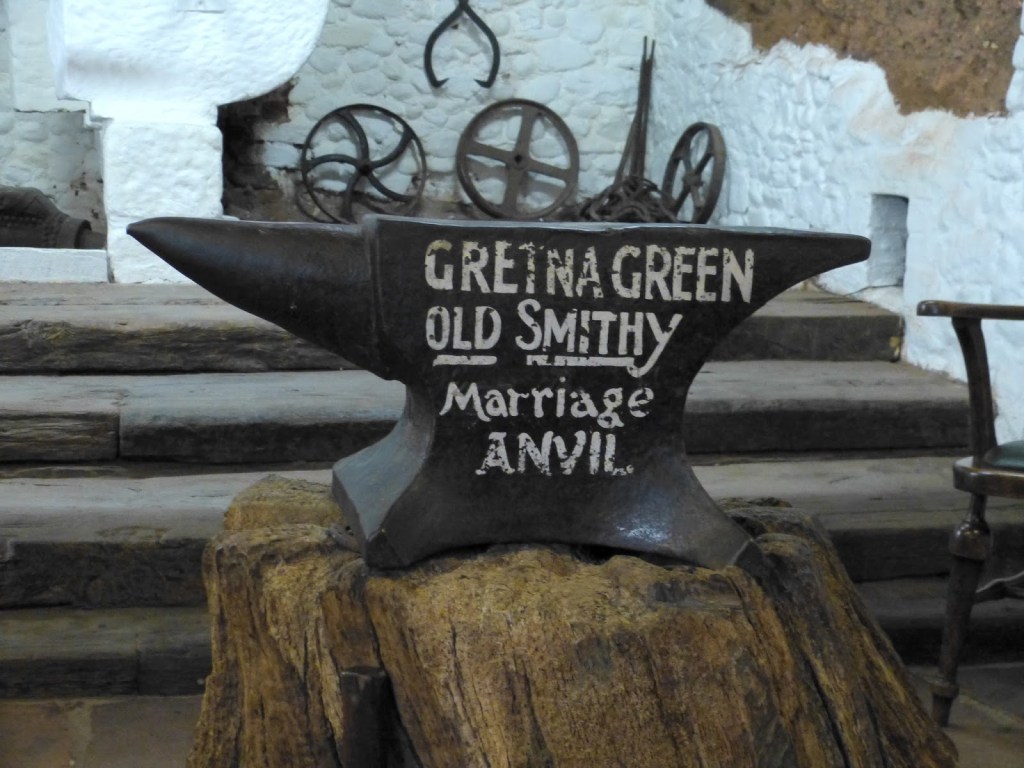
New business ventures thrived for those who served as Justice of the Peace. They saw an opportunity to boost business and began establishing “marriage mills” in border towns during the mid-1800’s. Even local blacksmiths followed the trend and quickly became known as “anvil priests” in those days. Performing an “anvil wedding” was even less restrictive since it required only the declaration from the couple in front of two witnesses. This type of ceremony was highly popular in Scotland, being the place of origin where it coined its name. Although Indiana had no waiting period before a nuptial, it did however have an age requirement for young couples. For women, the age of consent was 18 years old and for men, it was set at age 21 years old. Those young at heart who wanted to wed with parental consent were 16 and 18 respectively. At the north end of the State, Crown Point outpaced its ceremonies compared to marriage mills held at Jeffersonville, in southern Indiana, which on average produced at least 4,000 marriage licenses annually between 1916 and into the 1960’s.
(Pictured: Anvil in the main marriage room of the blacksmith’s shop, Gretna Green, Scotland, 2015)
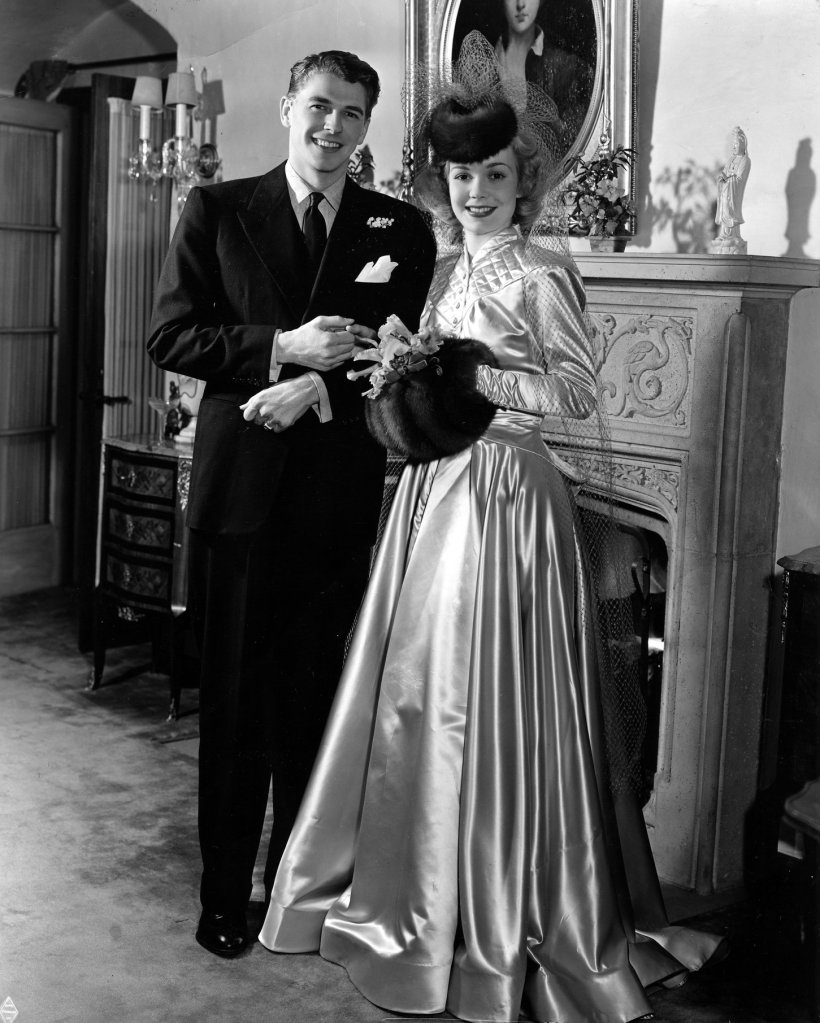
Public figures and celebrities took advantage of the wedding convenience offered in Crown Point, Lake County as marriage mill ceremonies grew in popularity. Some more famous Midwest marriages were of film stars Rudolph Valentino and Natacha Rambova, who were wed by Judge Howard Kemp in Crown Point in 1923 and film star turned U.S. President Ronald Reagan, who tied the knot with his young bride actress Jane Wyman in 1940.
(Pictured: Ronald Reagan and Jane Wyman, 1940)
Roscoe Ates
The Porter County Clerk’s office houses thousands of marriage records in their archived collections, but one that stands out is that of the American vaudeville performer and comedian, Roscoe Ates, who captivated the audience on both stage and film screen. His lifetime of achievements include 101 known credits to his name across several genres of productions. Roscoe Ates was an American vaudeville performer, actor of stage and screen, comedian and musician who primarily was featured in western films and television.
(Pictured: Roscoe Ates, Born Grange, Mississippi, January 20, 1895-March 1, 1962)
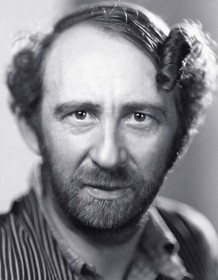
According to an account by Kenneth J. Wolf, Porter County Justice of the Peace, this acclaimed entertainer, who was best known as western character Soapy Jones, married Miss Leora Bella Jumps, 24, in Valparaiso on Saturday, June 28, 1938. At the time of the wedding, Ates was 43 years old and listed his residence as Los Angeles. Since it was nearly effortless to obtain a marriage license back then, it was quite common for a license to be issued in one county and the ceremony performed elsewhere by anyone willing to help tie the knot.
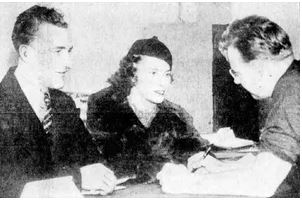
The City of Valparaiso located in Porter County to the east of Crown Point had its share of Gretna Green weddings for those who traveled across Illinois borders. Its no-hassle nuptials allowed couples to wed or elope without the interference of family and friends. Particularly in 1936, Porter County became a popular site when Crown Point’s mayor banned weddings from taking place between 9:00 PM and 8:00 AM. Since Illinois had a one week waiting period before they could wed, many without hesitation drove the 50 mile distance across state lines to Crown Point or Valparaiso, if stumped by the newly implemented time constraints in Crown Point. Since Indiana was considerably less restrictive, coming to Indiana’s Gretna Green marriage mills offered the easiest solution to cut through the red tape of bordering state marriage laws.
(Pictured: Paul Zigabarra and Dorothy Delich of Chicago apply for a Porter County Marriage license from deputy James Chester at the Valparaiso Courthouse in 1937. AP)
From 1915 to 1940 “gin marriage” laws also existed in Michigan, Ohio and Kentucky, which required a five-day waiting period between the license date and the wedding date. Such laws came from the Prohibition Era, whose couples may have been intoxicated and spontaneous in getting married. Impromptu marriages were often the cause of scrutiny and outcries by religious leaders and some legislators for stricter marriage laws to also combat the high divorce rates that were being experienced within the state. Legislators lobbied in the early stages of the trend but failed to pass any significant changes. However, in 1901, Indiana Attorney General W. L. Taylor was steadfast on cracking down on the marriage mills, after one lawyer brought attention to an old marriage license statute, which required the bride to reside within the county for 30 days before a license may be issued. Over the years, Indiana marriage laws have evolved to include standard questions as part of the marriage application process, including parental consent for minors.
References: Wikipedia.com; http://www.chipublib.org; Indiana State Library, http://www.library.in.gov; http://www.news.trace.com; http://www.chipublib.org; http://www.arleneeakle.com; http://www.indystar.com; http://www.rottentomatoes.com/celebrity/roscoe_ates
 The Dash