Written by Victoria Gresham | May 26, 2023
Memorial Day Origins
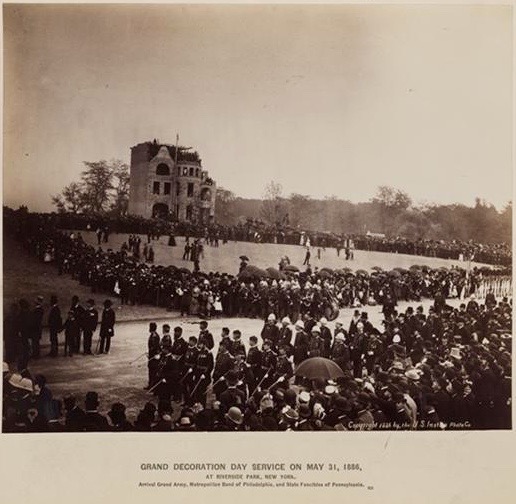
Memorial Day once known as Decoration Day was observed to honor soldiers who sacrificed their lives during the Civil War. Decoration Day was a tradition following the Civil War where veterans would decorate the graves of the fallen soldiers. General John Logan, a veteran of the Civil War and head of the Grand Army of the Republic, a Union veteran’s organization, established Decoration Day on May 30th. It had been three years after the war on May 5, 1868 that Logan encouraged the public from both sides of the war to decorate the gravesites of those who fell during their service with flowers.
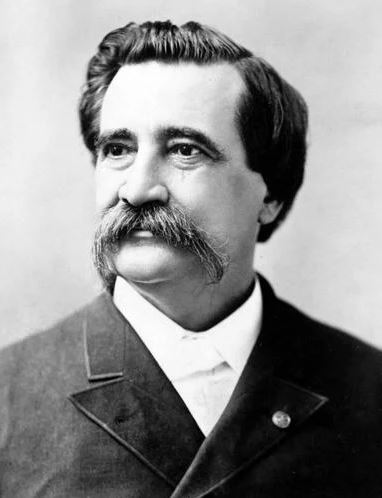
General Logan’s order for his posts to decorate graves “with the choicest flowers of springtime” urged: “We should guard their graves with sacred vigilance […] Let pleasant paths invite the coming and going of reverent visitors and fond mourners. Let no neglect, no ravages of time, testify to the present or to the coming generations that we have forgotten as a people the cost of a free and undivided republic.”
Photo Credit: Library of Congress
General Jacob Logan
On May 30, 1868, General Ulysses S. Grant presided over the first ceremony for the official National Decoration Day held at Arlington National Cemetery. The Grand Army of the Republic decorated the graves of both Union and Confederated soldiers buried there.
World War I changed how we celebrate Decoration Day. More than 116,000 Americans died fighting in World War I and it was the first major war fought in a foreign land. Decoration Day evolved beyond remembering the fallen of the Civil War to including all soldiers who died during wars on both American soil and abroad.
It was during the years after World War I that wearing a red poppy and reading the poem, “In Flanders Field” became a tradition. It became an official federal holiday in 1968 with the passing of the Uniform Monday Holiday Act, which established Memorial Day as the last Monday in May. Flags are ordered to fly at half-staff then full staff at noon on Memorial Day. At sunrise, a flag should be briskly raised to full-staff then slowly lowered to half-staff in honor of the soldiers who have fallen in the line of duty.
At noon, the flag is briskly raised to full-staff in honor of those who served and to salute those soldiers who sacrificed their lives in the line of duty defending the USA. In 1966, Congress and President Lyndon Johnson declared the birthplace of Memorial Day to be Waterloo, New York. On May 5, 1866, a ceremony had taken place there that honored local Civil War veterans, which influenced the decision. In 1971, Memorial Day was declared a national holiday by an act of Congress to be observed on Monday, May 30th.
Today, Memorial Day honors all U.S. veterans who served in the armed forces. While for Porter County, its history of veterans dates back to its formative years. Although at the time of the American Revolution, no white man had settled in Porter County. It was nearly 40 years later at the end of the war that Joseph Baily erected his cabin on the bank of the Calumet River, which was still 53 years prior to the organization of the county. While the early settlers may not have had an active part in the War for Independence, two Continental soldiers passed away in their declining years in Porter County and a widow of a soldier planted her roots here before her death.
Several veterans of the War of 1812 became citizens of Porter County. Those who came to call it home were Isaac Cornell, Robert Folsom, John and Eliphalet D. Curtis and Myron Powell. Both Isaac and Robert are buried in the Cornell graveyard, both having died within a few years after settling in the county. John Curtis enlisted in New York, came to Porter County in 1836, settled near Wheeler, and died there in 1865. E. D. Curtis also joined the army while living in New York. He came to the county in 1838, and settled near Porter Cross-roads, where he died in the spring of 1865. Myron Powell enlisted in Vermont, came to the Western Reserve in Ohio shortly after the war and homesteaded in Porter County for the rest of his days until his rest in 1865. Ruel Starr and James M. Bueil served in the Black Hawk war and they too later settled in Porter County.
The Mexican War began ten years after the formation of Porter County. While it does not appear that a company of volunteers were recruited in Porter County at that time, however, Joseph P Smith, former clerk of Lake County recruited a company of volunteers in 1846 after resigning from office to serve in the war. The following Porter County men were part of the company: Jacob Alyea, Sergeant Daniel Brown Oliver Conklin, Hudson S. Farwell, M. Hopkins, Clinton Jackson, David Musselman, Simeon P. Patterson, Sergeant Newell Pulsifer, Cyrus H. Risden, John Sparks, Lewis P. Streeter and Gilbert Wariner. Oliver Conklin, Cyrus H. Risden and John Sparks died while in service. The company, whose duties were to guard wagon trains, was not assigned to either of the three volunteer regiments that were raised in Indiana, but became Company H, Sixteenth United States infantry, which regiment was commanded by Colonel John W. Tibbetts.

The Shot Heard Around The World
Civil War was brewing in the midst of the early nation. South Carolina launched the movement with its ordinance of secession in 1860. States that soon followed were Mississippi, Florida, Alabama, Georgia, Louisiana and Texas to make up the Southern Confederacy. President Lincoln was inaugurated on March 4, 1861 to be faced with a dividing nation. It was at 4:20 in the morning on April 12th that the first shot of the Civil War fired by Edmund Ruflin, a native of Virginia went crashing against the solid walls of Fort Sumter. President Lincoln accepted the challenge and on April 15th called for 75,000 volunteers “to suppress the rebellion.”
On the same day, the Valparaiso Republican publication issued an extra edition containing the following call for a meeting at the court house that evening:
“Americans! Union Men! Rally. The war has begun. Fort Sumter has fallen! Our flag has been insulted, fired upon and struck to traitors! A Pelican and a Rattlesnake banner floats in its stead! Let it be torn down and the Stars and Stripes float in its place, or let us perish in the attempt. Davis, the traitor, says that next the Secession flag shall wave over the Capitol at Washington. Shall it be so? A thousand times NO! Then to-night let us rally at the court house, burying all party names, and come to the rescue of the Republic against its mortal enemies. We are beaten at Sumter, but not conquered, and must rally to preserve the inheritance left us by our fathers. Come one, come all who love their country! To-night let us pledge our lives, our fortunes and our sacred honor to the defense of the proudest flag that ever waved over a free people.”
Porter County was quick to respond to the call and packed the court house. Present were Dr. E. Jones, who was elected to preside over the meeting and J. F. McCarthy and A. J. Berry were chosen as secretaries. A committee consisting of Dr. Cameron, Jacob Brewer, S. S. and J. N. Skinner, and Mark L. De Motte was selected to draft multiple resolutions, which were unanimously passed, that would bring the men of Porter County together setting aside their differences and political views to unite as a people to wit: that “without any regard to the sacrifice that we may be called upon to make […] we hereby pledge to the Government our lives, our fortunes, and our sacred honor for the maintenance of the Constitution and the supremacy of the laws.” A company of 130 men organized ready to serve at their free-will.
On April 18th another meeting was held at the courthouse whereas the men selected the officers of the company, further resolving “that as we believe the citizens of Porter County, without regard to party, are loyal to the Union, that they are requested to pro-cure and wear Union badges.” The newly formed company departed to Indianapolis on April 21st where they were sworn in by Judge Perkins of the Supreme Court with the presence of Governor Morton. The company was split into two having more men than required for a company. Col. Robert H. Milroy commanded the first band having 77 enlisted men known as Company H, Ninth Indiana Infantry with the following officers: Robert A. Cameron, captain; Isaac C. B. Suman, first lieutenant; Gilbert A. Pierce, second lieutenant. The second company was known as the “Valparaiso Guards” made up of the remaining men present.
Over the course of the Civil War there were many Porter County volunteers, which formed several companies including Company I, Twentieth Indiana Infantry, Twenty-ninth Indiana Infantry, which was commanded by Colonel John F. Miller, the Seventy-third Indiana Infantry with Robert W. Graham, of Valparaiso, as lieutenant-colonel, and Hiram S. Green, of Porter county, assistant surgeon. Nicholas E. Manville served awhile as chaplain of the Eighty-sixth Indiana infantry.
Through the course of the war with nearly two dozen infantries and cavalries combined, Porter County enlisted hundreds of men to serve in every capacity imaginable. Years later by 1880, the interest of maintaining a state militia took flight that the creation of such was made and became known as the Indiana National Guard. In the fall of 1881 a company was organized in Porter County, with A. W. Lytle as Captain. A second call for volunteers of 75,000 men was made and once again Porter County did not hesitate to rise to the call offering a roster of 105 names.
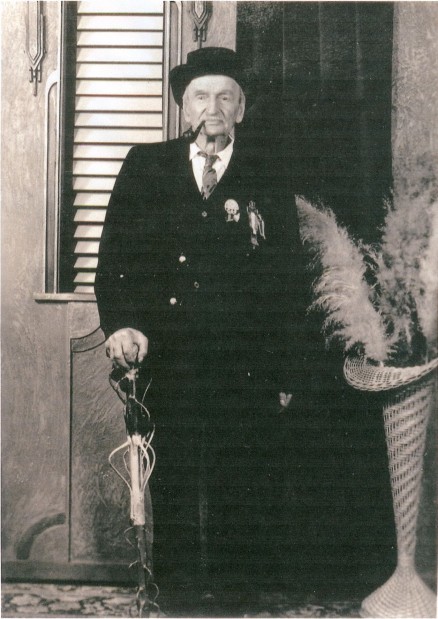
Porter County’s last Civil War veteran, Jacob Mooker, passed away on October 10, 1941 at the age of 99 years old. At the time of his death Mooker was serving as commander of the local Chaplain Brown Post, G. A. R., though the active duties of the post were handled by Julius Bornholt, of the Sons of Union Veterans. After the war, Mooker would fashion canes from Christmas trees and give them to friends and frequented the Porter County Courthouse lawn. He participated in parades throughout the Midwest until his death. Jacob Mooker, a German immigrant, was the last Civil War veteran buried in Porter County.
References: U.S. Department of Veterans Affairs; Public Broadcasting Services; History.com; thestrawfoot.com; GettysburgFlag.com; genealogytrails.com; daviddportercamp116.org; findagrave.com; Library of Congress
 The Dash